
The Craft of Making Strings — Between Hand and Ear

Introduction
In the quiet of the workshop, sound begins long before a string is plucked. It begins in the hands that twist fibers of gut into line — not by machine rhythm, but by feel. Making a gut string is part science, part intuition, and entirely human.
Selection
It starts with choosing the right material: long, clean, strong gut with fine fibers. Each batch differs slightly, and learning to read its character is the maker’s first art. The raw material sets the limits — and the possibilities — of the final sound.
Twisting and Drying
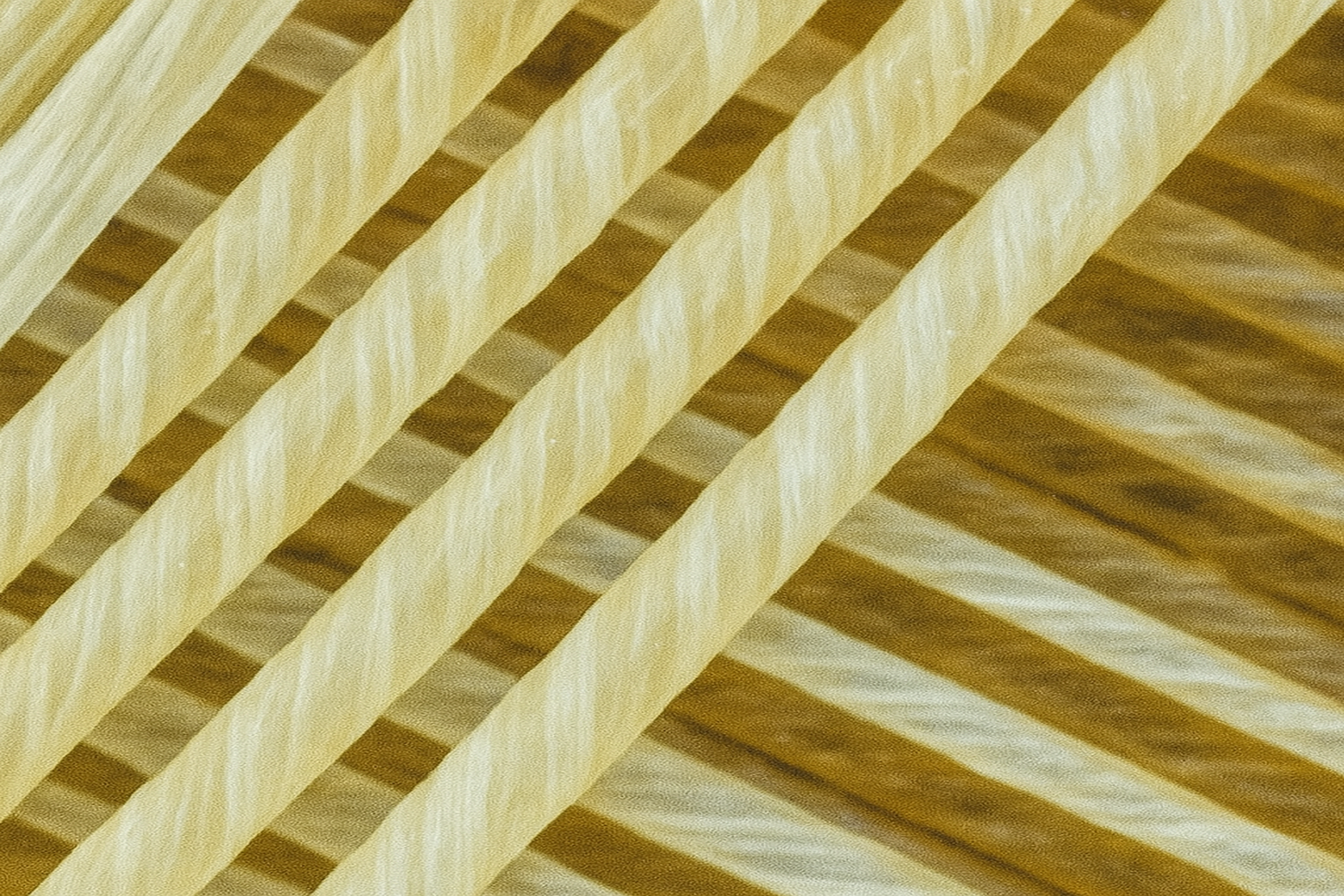
The fibers are soaked, aligned, and twisted together. The degree of twist determines tone and strength: tighter for brightness and stability, looser for warmth and flexibility.
Drying is done in moving air, not heat — slowly, as the string finds its natural roundness. Patience is the invisible ingredient.
Polishing and Listening
Once dry, the strings are polished and measured, but also listened to. Each string has a quiet note of its own when plucked bare. The maker adjusts the finish until that note feels centered and even — a tactile form of tuning long before the instrument is strung.
Craft as Dialogue
No two strings are exactly alike. Each carries traces of the maker’s decisions: tension, twist, texture. That individuality is not an imperfection; it’s what gives Villotta strings their living quality.
Every finished string holds both precision and unpredictability — the meeting point of craft and ear.
Closing Reflection
Gut string making is a dialogue between control and surrender. The maker shapes, but the material speaks back.
In that conversation lies the soul of the sound — the same resonance that has guided music for centuries.